Friday, 22 July 2016

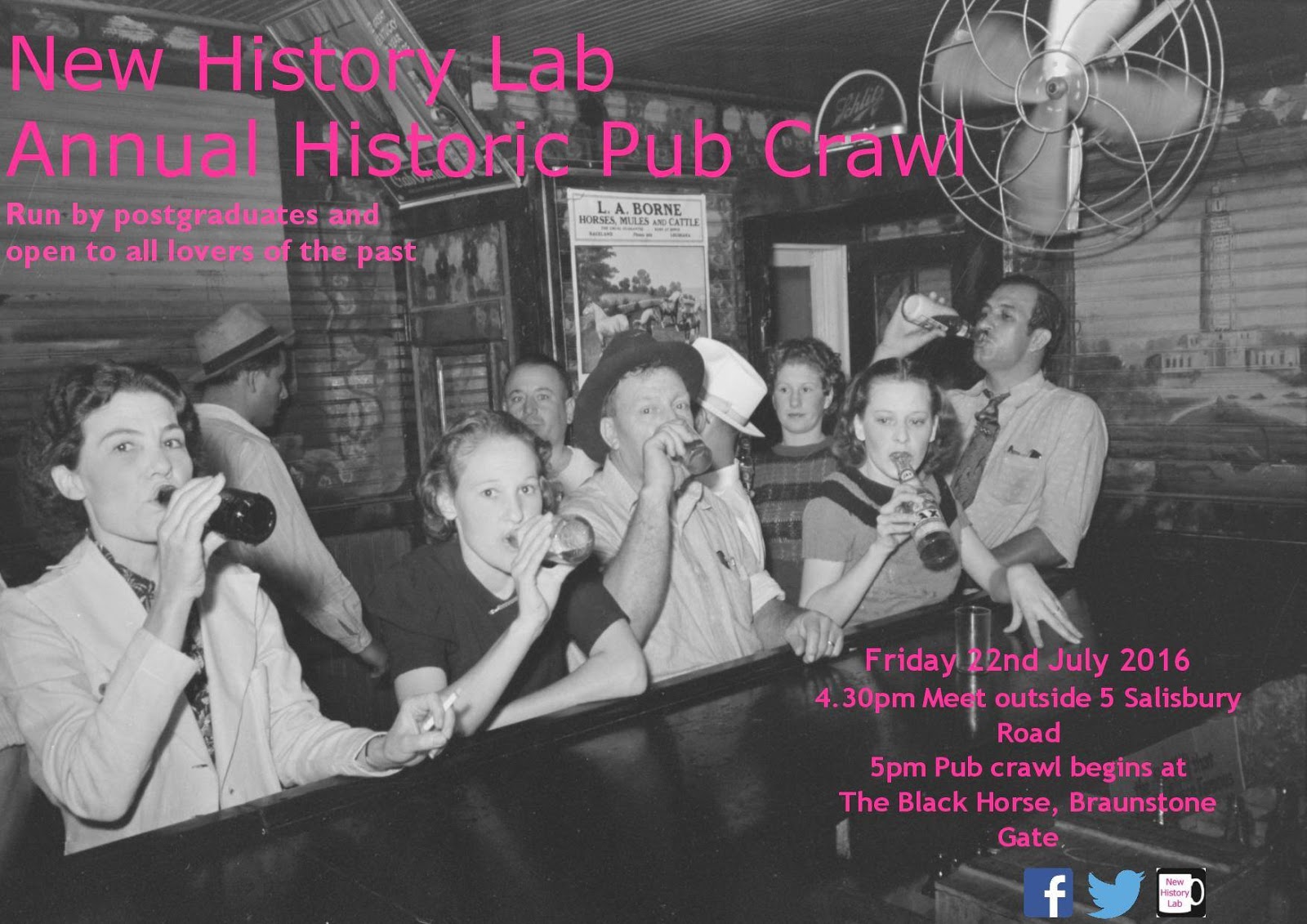
Historic Pub Crawl - extra info


It's that time of year again - we're really excited about our annual historic pub crawl around Leicester led by Colin Hyde, researcher and outreach officer at the East Midlands Oral History Archive.

If you'd like to find out a bit more about some of the places we'll be visiting, check out these bits and pieces:


Tuesday, 4 August 2015

The Oldest Qur'an

Today's post comes from Dan Porter, an MRes student in the School of History. He's studying Islamic ideas about Western Christians during the Crusades.

You might have noticed a news item in the last few weeks about a unique discovery in the archives of the University of Birmingham library. The incredible discovery of the oldest existing, written fragment of the Qur'an anywhere in the world, has potentially huge ramifications.  As an artefact it is both significant in academic and spiritual terms.  In this post I wanted to explore why it is so significant from both of these perspectives.

There is a quote by Bernard Lewis, Prof. of Near Eastern Studies at Princeton, in which he describes the origins of Islam.
"... Islam was born in the full light of history. Its roots are at surface level, the life of its founder is as well known to us as those of the Reformers of the sixteenth century."
This position has been challenged consistently for the last 40 years, most famously by academics such as Patricia Crone (who tragically died less than two weeks before this announcement; she would have had a lot to say on this discovery!).  The main argument against Lewis' statement was that there was no documentary evidence of written Qur'ans for some 80 years after the death of Muhammad with the implication being that the version we have today may have been modified or changed in some way from that originally recited by Muhammad.  Tom Holland goes further in his book In the Shadow of the Sword to suggest that Islam as a religion was only codified after the Arab conquests in the 7th and 8th centuries and that it originates not in Mecca and Medina but somewhere near the Dead Sea.  What is clear is that the Qur'an extant today was codified by Uthman, the third Caliph, some twenty years after the death of the Prophet (632 CE/ 11 AH).  This event is recorded by the 9th century Islamic scholar Al-Bukhari in his seminal work on Islamic hadith, Sahih al-Bukhari;
'So Uthman sent a message to Hafsa saying, "Send us the manuscripts of the Quran so that we may compile the Quranic materials in perfect copies and return the manuscripts to you." Hafsa sent it to Uthman. Uthman then ordered Zaid bin Thabit (Muhammad's personal scribe), Abdullah bin AzZubair, Said bin Al-As and AbdurRahman bin Harith bin Hisham to rewrite the manuscripts in perfect copies.' Bukhari, Sahih al-Bukhari, [6:61:510].
What these fragments prove is that not only did the Qur'an exist in written form earlier than believed but also that it would appear to have been written down during, or in very close proximity too, the lifetime of Muhammad himself.  This opens up potential to prove that the Qur'an today is directly transmitted, without breaks, to its current form from the original.

The academic potential herein is of secondary concern to the majority of the Islamic community, however.  The direct transmission of the Qur'an from the Prophet to the present day is a matter of faith, not one of concrete evidence.  On a spiritual level we're looking at a physical item that was produced during the lifetime of the Prophet, Muhammad.  It is tempting to believe that the scribe met him in person or indeed may have had a personal relationship with the Prophet.  It certainly wouldn't have been unusual within the 'umma, or community, at the time.  The Qur'an, in Islamic terms, is the literal word of God; it is the last revelation to humanity from the divine and is the basis for the ordering of the world according to God's law.  As such, any Qur'an is holy.  These fragments however, because of their provenance, have a special significance, especially for Sunni Muslims for whom the traditions of Muhammad and the Qu'ran are the bedrock of their faith.  The term Sunni roughly means "people of the [Islamic] tradition".  This refers to their adherence to the traditions of the life of the Prophet.  Islam doesn't have the same reverence for relics that Catholicism had or indeed to some degree, still has, but these fragments of the Qur'an are still enormously important spiritual objects.  To put the significance of these fragments into a Christian spiritual context, it would be the equivalent of finding a copy of a gospel that could be dated to within the historical life of Christ.  I think there is likely to be an intense debate about where these fragments should finally reside.  The fact that the University of Birmingham was explicit about the fragments remaining in Birmingham from the initial press release indicates they are fully aware of these implications.

On a final note I'll leave you with this thought.  From what I can read, with the published photos and my limited Arabic, the fragment seems to come from the Surat Taha in which Allah tells the story of how he called upon Moses to challenge Pharaoh. The theme of this sura is the existence of God and the signs of such given to the faithful ...

The Mingana collection is viewable online in their virtual manuscript room.  You can access it here.

Monday, 1 June 2015

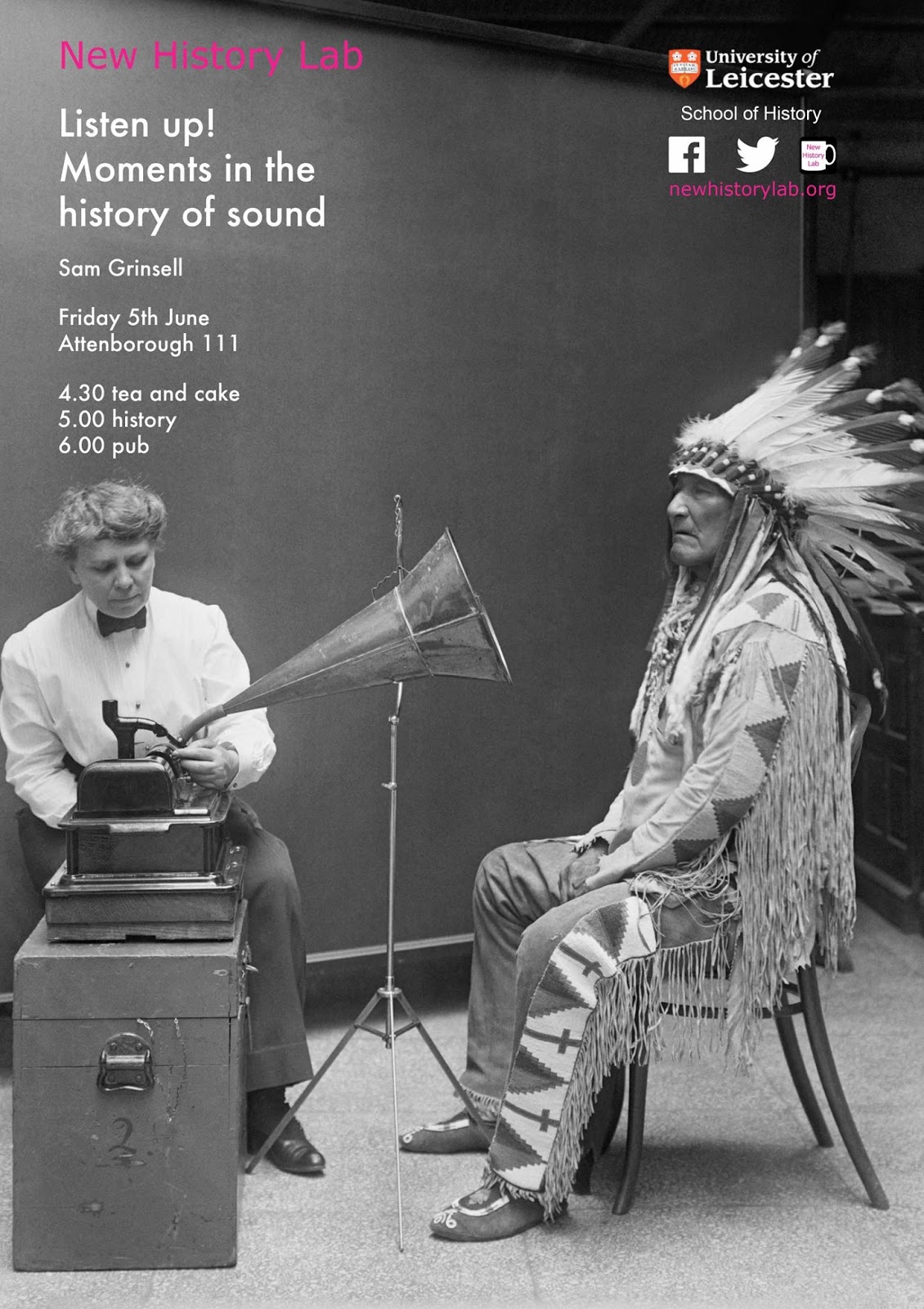
Listen Up! Moments in the History of Sound


This Friday, our very own Sam Grinsell will be presenting on the history of sound. Currently an MA student with the Centre for Urban History, Sam has been responsible for designing almost all of the lab's posters over the past few years (including the above). Please join us at 4:30 for tea, cake, and history!

Tuesday, 26 May 2015

The Liberal Party and the Great War


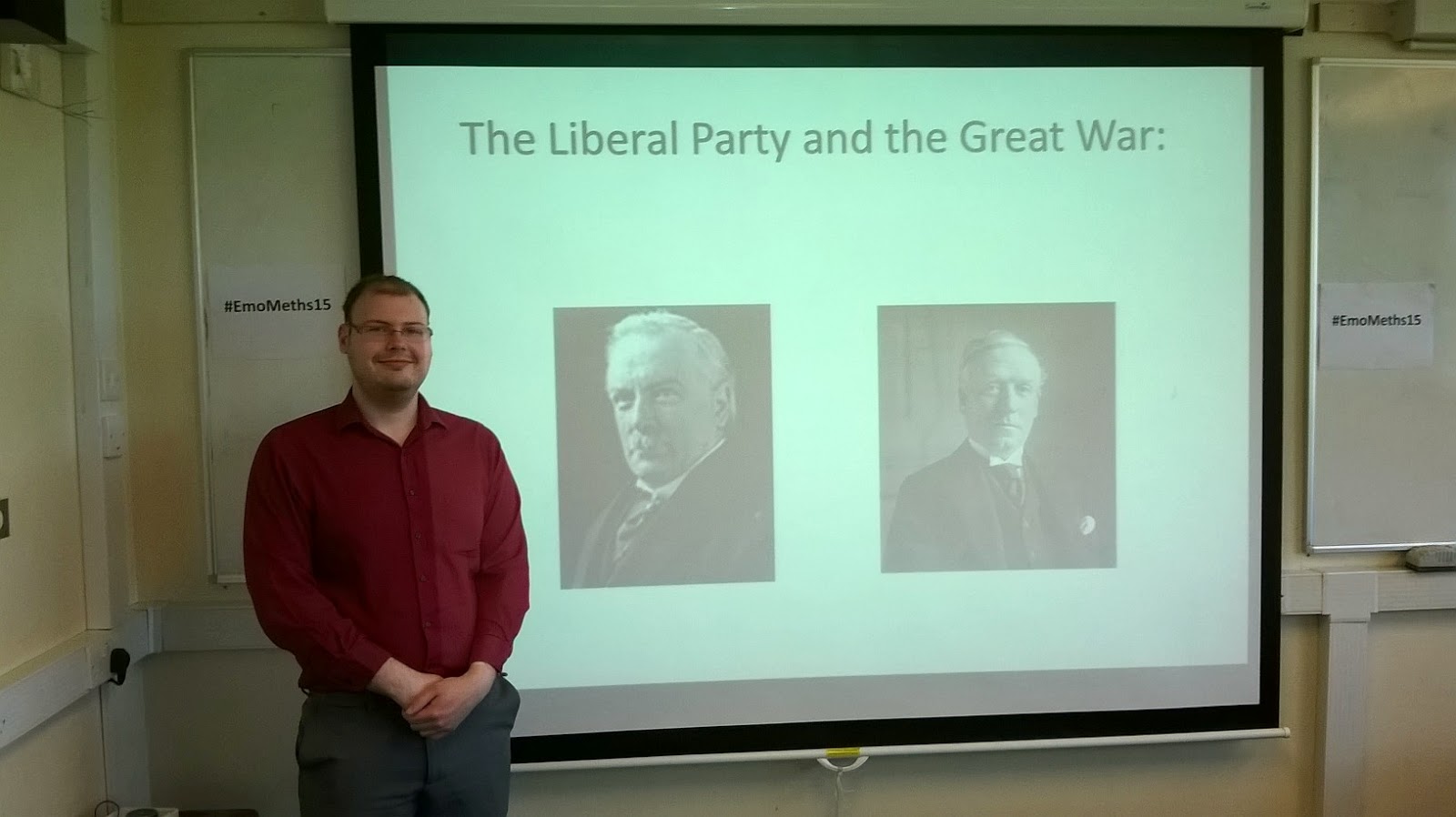
On 22nd May, the lab played host to Dr. Gavin Freeman, a former committee member and chairman. He took as his subject 'The Liberal Party and the Great War', giving us a detailed narrative of the power dynamics at work within the British governement during the First World War. I was particularly interested to hear about the extent to which the Liberals were divided over how to conduct the war, with conscription being a particular area of contention. As Prime Minister of a coalition government, Lloyd George chiefly relied on Conservative support in order to maintain power and prosecute the war effort. This raises uncomfortable questions of whether ideology must necessarily be compromised in order to face a national crisis.

With histories of the First World War often focussing on the 'mud and blood' of the trenches, it is important to remember that events on the front had considerable ramifications for those in Westminster and a lasting effect on the political landscape of this country.

Many thanks to Gavin for his time. At our next event, Sam Grinsell will be presenting 'Listen Up! Moments in the History of Sound.'

Thursday, 21 May 2015

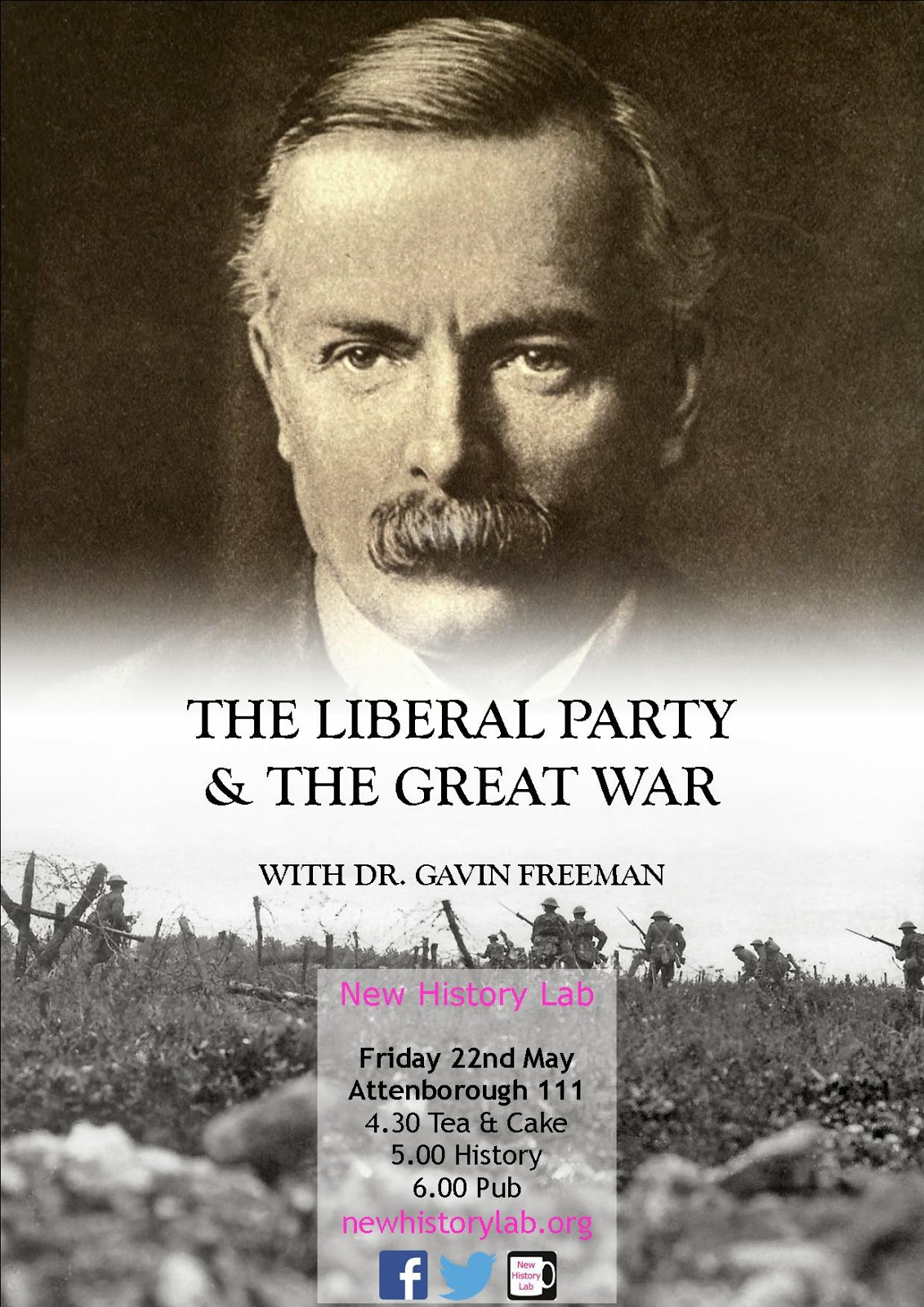
'The Liberal Party & the Great War'


Tomorrow, the lab welcomes back Dr. Gavin Freeman - a former committee member and chairman!

Tuesday, 12 May 2015

How I learned to stop worrying and got a job


On 8th May, in the first of our Spring/Summer series of events, New History Lab hosted three Leicester alumni who spoke of their experiences in the job market after finishing their Masters degrees.
First up, Mark Small told us how he came to work at the Bristol Record Office, a path which began with a trip to Bath during his Masters which led to a job with the Churches Conservation Trust. The Masters then, was not simply a qualification to put on the CV but the inspiration for a potential career path. The overarching message from Mark was not to plan your career, or at least, don’t stick to a plan if other opportunities arise. And so, Mark told us how he moved from old buildings to old documents via the Red Lodge, Bristol’s smallest museum.

Secondly, Tim Savage recounted the ups and downs of postgraduate careers, or as he put it ‘the good, the bad & the ugly’, in a funny and engaging manner. Tim’s postgraduate career has involved many jobs, from call centres to the heritage sector. In his most recent job at the Carnegie Museum in Melton, Tim has been working on a very exciting project with the Royal Army Veterinary Corps; with postgraduate careers, it’s always great to know that there’s light at the end of the tunnel!

Last but not least, Mike Fox told us of his work with the campaigning organisation SAVE Britain’s Heritage. Having completed a Masters in Urban Conservation, Mike set about putting theory into practice, participating in campaigns to try and preserve many historic buildings. While I can’t speak for anyone else in the audience, a particular favourite of mine was Wentworth Woodhouse, a large country house in danger of losing its ‘wings’, the house having been undermined for coal after the Second World War.

It was great to hear about career opportunities for postgraduates and what three former students have got up to since they left. All of the speakers were Centre for Urban History alumni and we thank Roey Sweet, Director of CUH, for helping to organise the event. Our next event comes this Friday (15th May) with a Ghost Tour of Leicester.

Aaron Andrews

Tuesday, 5 May 2015

Summer Labs!


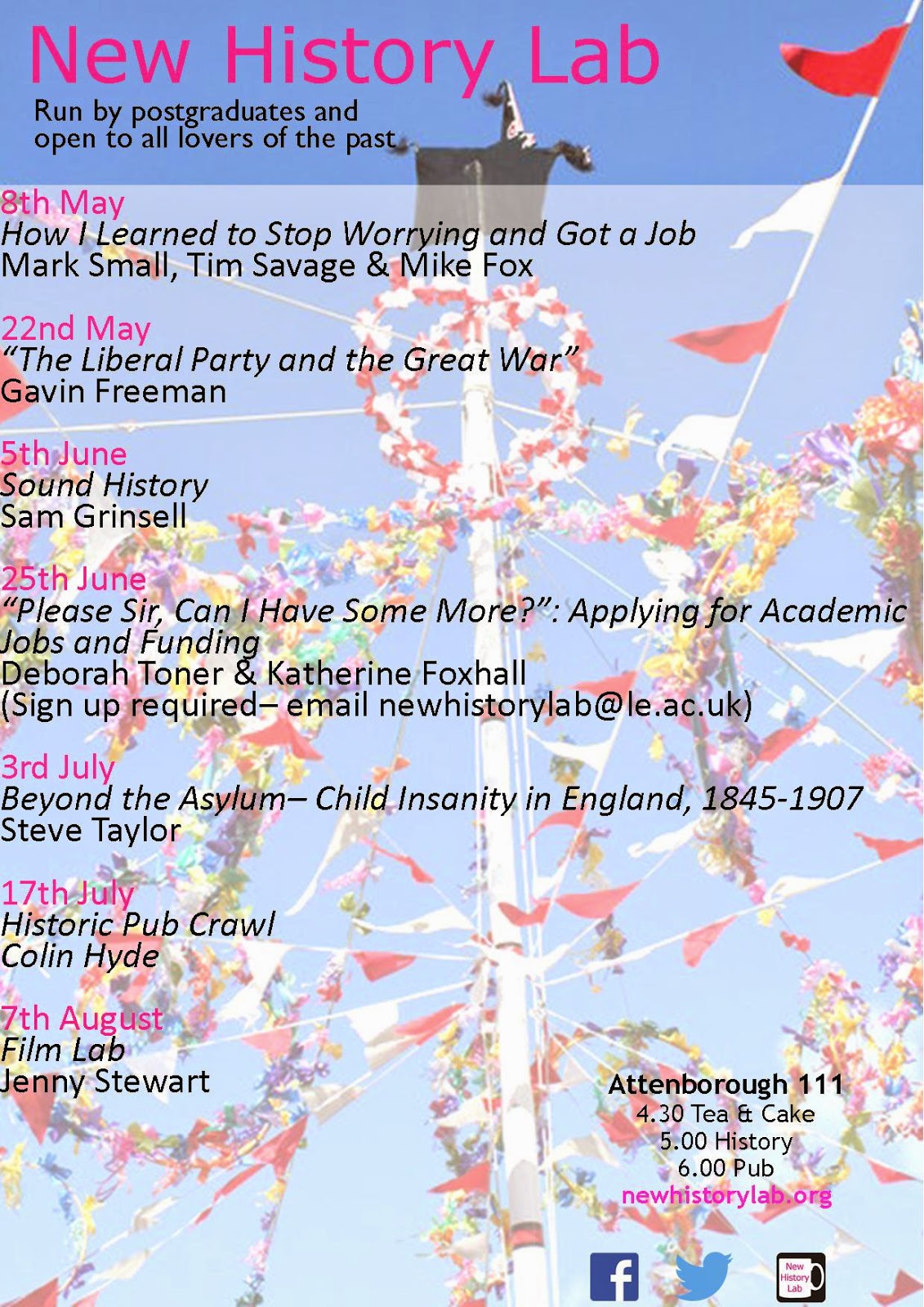
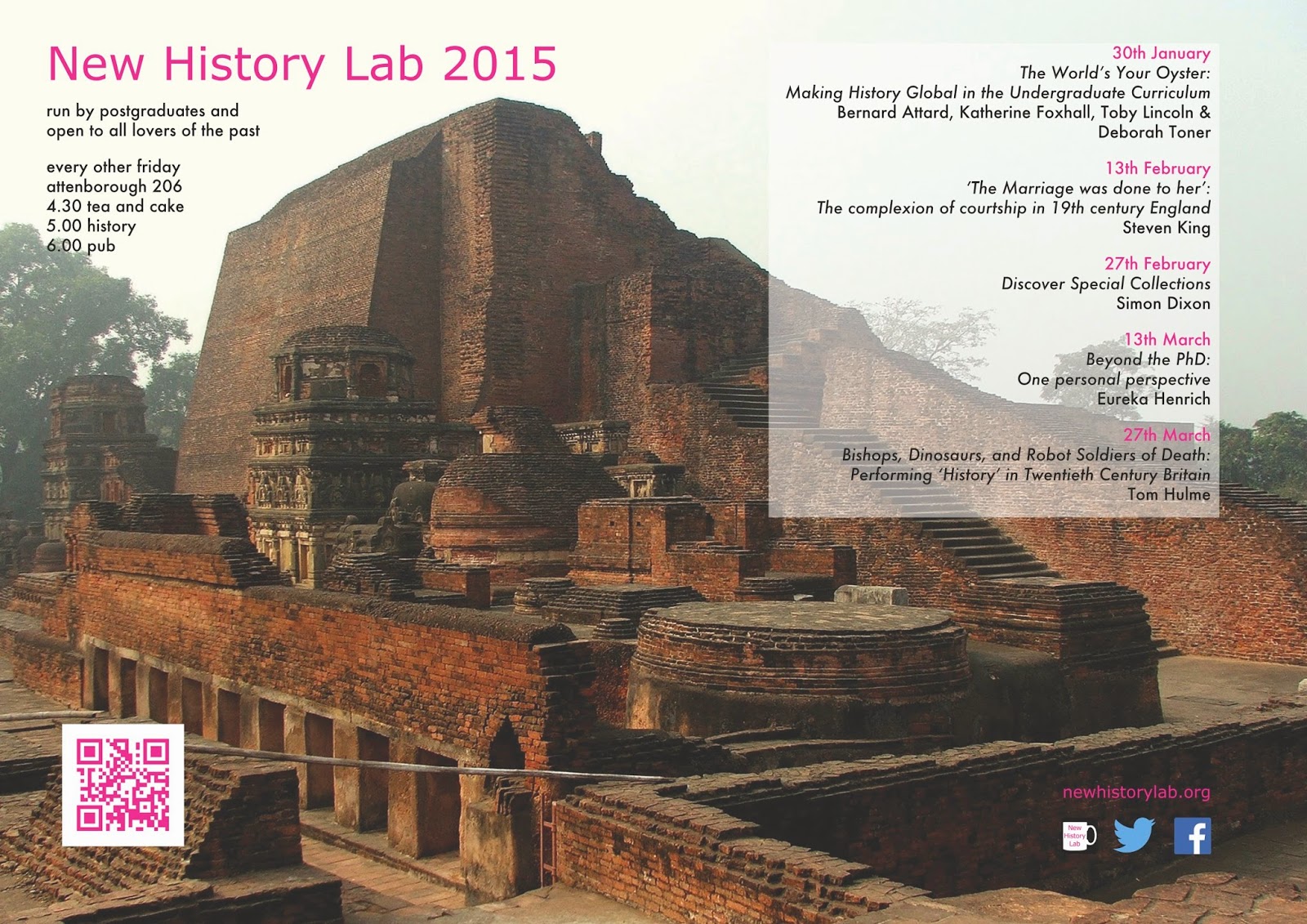
Yes that's right! We have a jam-packed summer planned with a pub crawl, advice on funding applications and even a film lab. Check out this poster and more to follow throughout the following months. Don't forget our first lab of the summer this Friday in Attenborough 111 for tea, cake and non-academic job advice!

Monday, 9 March 2015

The Wellcome's Institute of Sexology Exhibit


On Saturday I decided to visit the Wellcome Trust's Institute of Sexology Exhibit after many, many, suggestions to do so by friends and colleagues. As a self-proclaimed 'sexologist-in-training' I was quite curious to see what this exhibit had to offer, particularly because of its association with the Kinsey Institute of America.

There was a bit of a wait since only so many people can be in the exhibit at once and also because it's FREE. I was handed a booklet with vague summary and history of some of the collection which also had a blank page at the back reserved for notes. I wish I had brought a pen with me but staff are also happy to lend a pen if you look excited and deranged enough.

On entering the exhibit, the first thing I saw was a chastity belt. I knew I had struck gold with this exhibit. I will admit that my research interests are a little out of the ordinary but this exhibit made me feel quite ordinary. There were illustrated scenes from the kama sutra, films of animals mating and even equipment from the famous experiments by Dr. Masters and Virginia Johnson. The exhibit was slightly out of my time period with the major case studies carried out on Freud, Stopes and Kinsey but it was interesting nonetheless and I would definitely go again. I would also encourage others to visit the exhibit to understand the discipline of sexology.

On Friday we have a Wellcome Trust Fellow from the University of Leicester coming to talk about her experience of life after the PhD. We encourage people to come along to ask Eureka questions about the process of applying for funding and fellowships after postgraduate study as well as about her current research project!


The link for details on the exhibit can be found here: http://wellcomecollection.org/exhibitions/institute-sexology

Friday, 27 February 2015

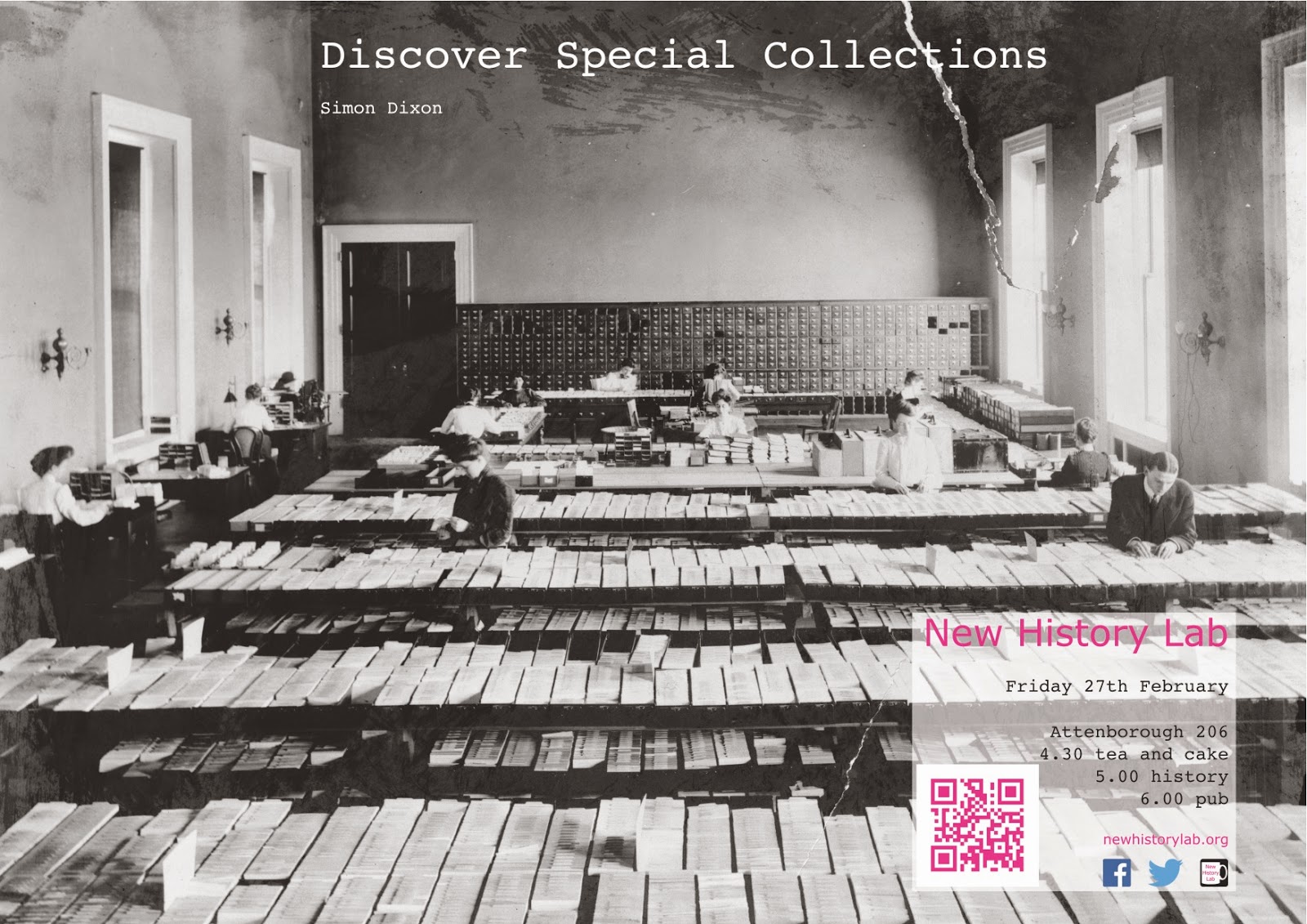
Discover Special Collections, meet in Library Seminar Room

For tonight's lab please join us in the Library Seminar Room, not Attenborough 206. If you do not have access to the library please email you details to Jennie [email protected] and we will give your name to the library staff :)

Saturday, 21 February 2015

'Everyday life in East Germany' and 'Discover Special Collections'


This week we have two events to promote! In our usual Friday lab slot we will be joined by Simon Dixon from the David Wilson Library, who will be talking about the Special Collections' holdings and how we might make the most of them.
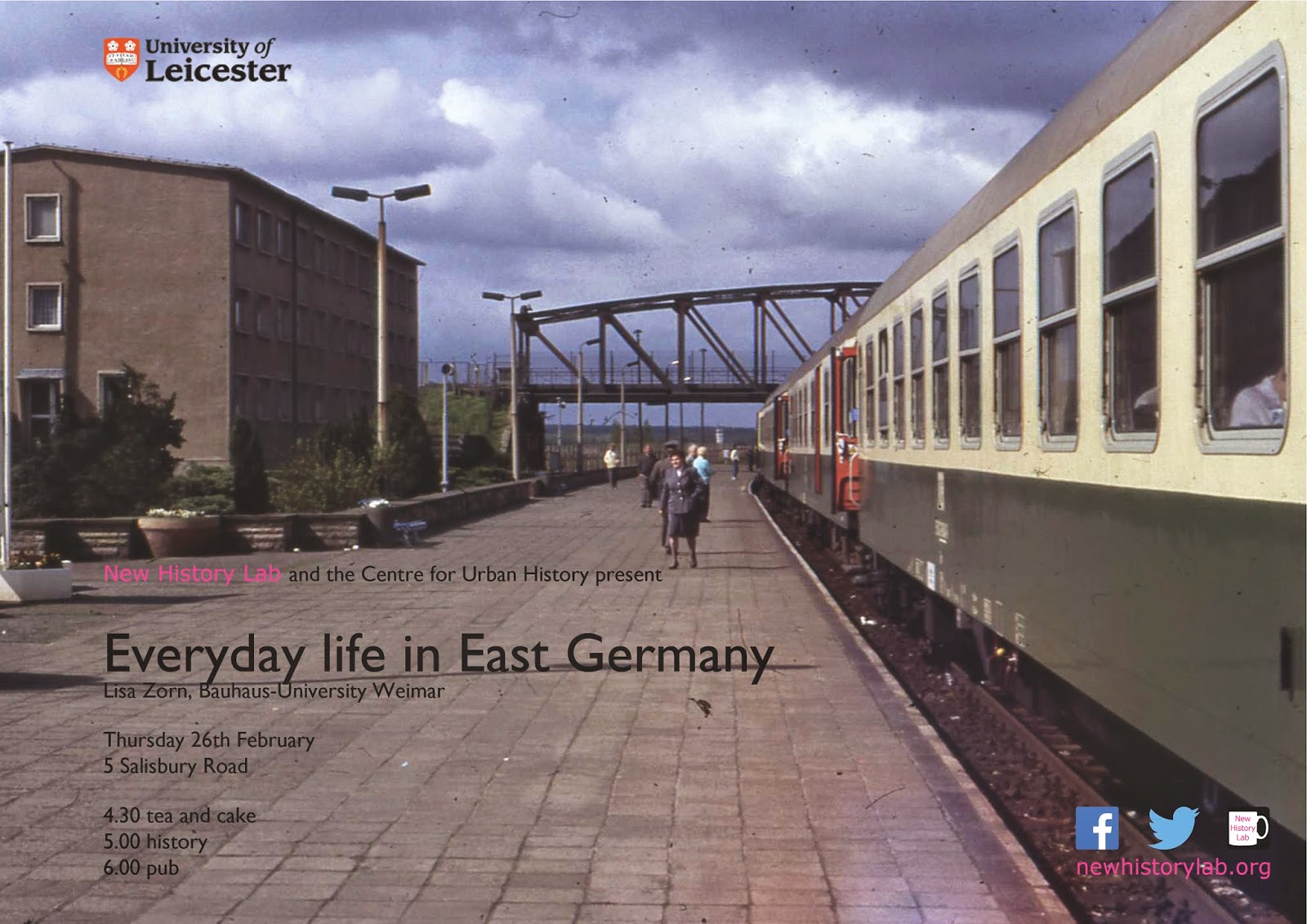
Before that on Thursday night, in a joint event with the Centre for Urban History, New History Lab will be proud to present special guest Lisa Zorn from Bauhaus University. She will be speaking on 'Everyday life in East Germany'. This will be at usual lab time, but in our old home of 5 Salisbury Road.
A busy week ahead, we hope to see as many of you around as possible!

Tuesday, 10 February 2015

2015 so far

Blink and you end up a month and a half into the year! The days are getting longer and the sun a little warmer; it won't be long before we're surrounded by daffodils, swallows, lambs, rabbit-shaped chocolates and other harbingers of springtime. Meanwhile, here are my thoughts on the labs we've had so far, and what we can look forward to over the rest of the term...

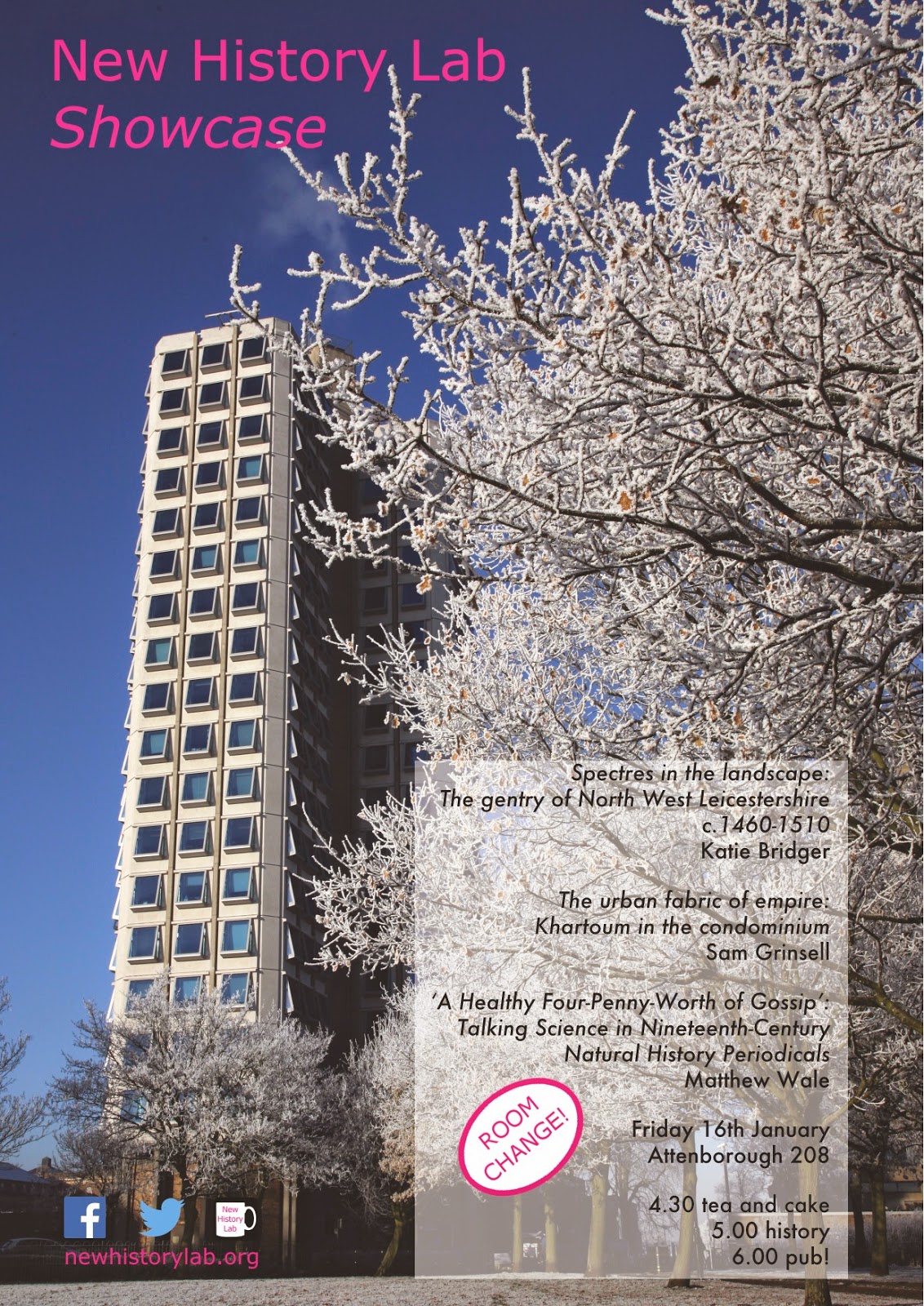
New History Lab Showcase

Our original timetable for this term started on January 30th, but we decided that we simply couldn't wait that long. Also, while we love having eminent guests sharing their knowledge, part of the remit of the lab is to encourage postgrads to speak about their own research and propose their own events. With this in mind we planned an 'in house' lab with talks from myself, Katie Bridger and Matt Wale. With our different interests (colonial Khartoum, medieval Leicestershire and Victorian scientific periodicals respectively) we also hoped to have something to appeal to everyone.
I won't say much about my talk except to mention that I really, really hadn't slept much before writing and delivering it. If this was discernible to those of you there, I apologise. Katie's talk on the gentry of North West Leicestershire introduced me to an area of history I knew little about. In particular, I found the linking of the histories of particular families to landscape and architectural history fascinating. This has much to add, I think, to how we relate modern concerns around the construction of place to more traditional histories of elites.
Matt's evocation of the lively discourses carried on in the pages of nineteenth-century scientific journals featured an intriguing array of characters and claims. Many contributors were amateurs who had day jobs but also pursued an intense interest in (for example) hedgehogs. The cheap printing of the late nineteenth century enabled the growth of specialist journals through which likeminded scientists could exchange thoughts, plans and specimens.
We were gratified to have a good attendance for an event near the start of term, and it was great to gather in the pub once again and catch up with friends after the long break.

The World's Your Oyster

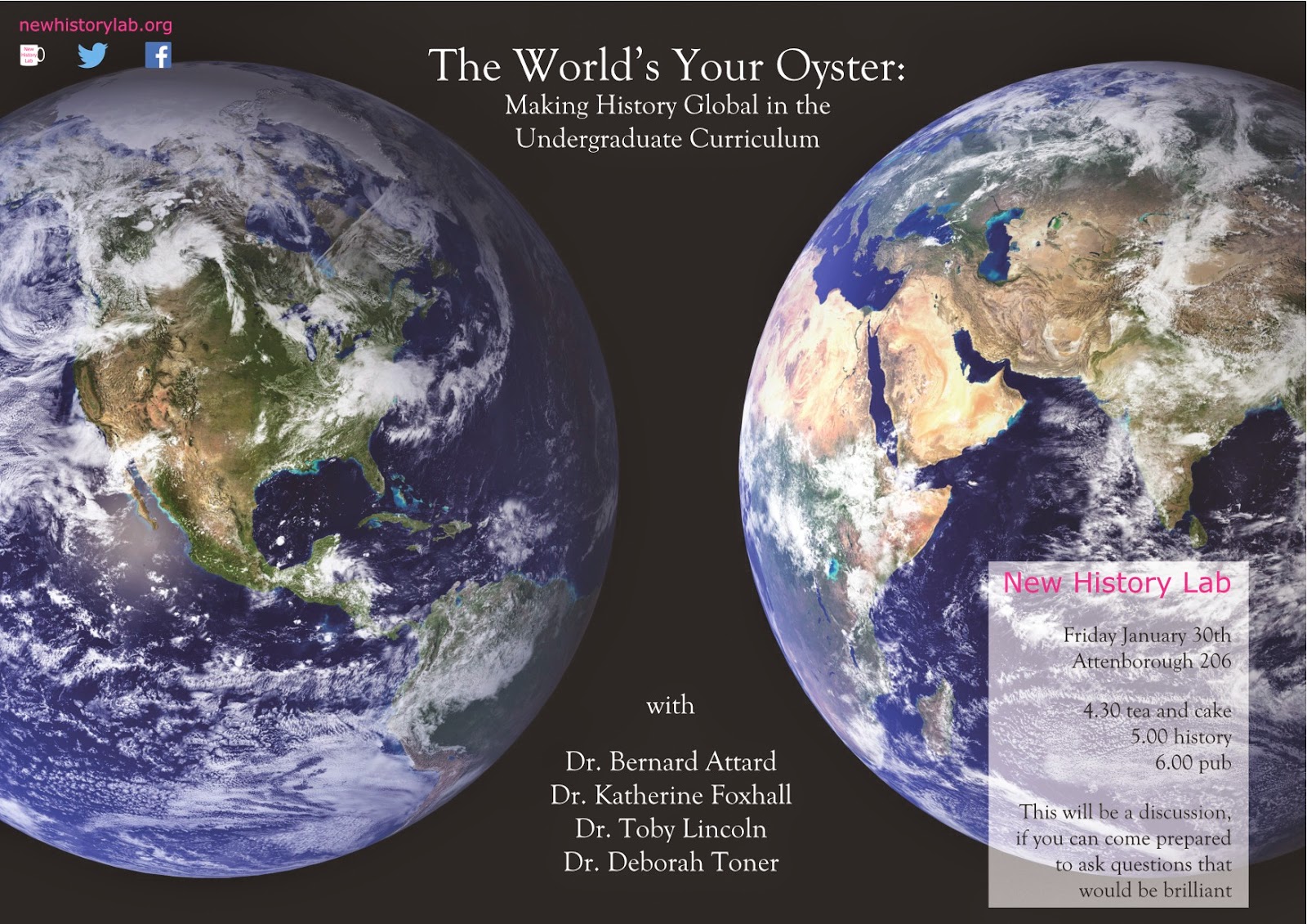
Two weeks later we gathered for an event that was something of a departure from our usual format: rather than a talk, or set of talks, we would be hosting a discussion of how best to introduce undergraduates to global history through a first year module currently being designed. This was an opportunity for the lab to play a role in shaping the undergraduate curriculum, and to gain some insight into how modules are constructed.
Toby Lincoln and Deborah Toner began the session by outlining the aims of the module and the structure agreed upon so far. There were additional contributions and comments from Clare Anderson, Bernard Attard, Katherine Foxhall and Prashant Kidambi. After some general discussion, attendees broke into groups to work on proposals for themes that might attract an undergraduate student, and which could provide linking threads through the module. The session closed with more general discussion, and a white-board busy with ideas and connections.
Although much stimulating debate was had, an hour was perhaps rather a short period in which to hope to build much consensus, especially given the number of people present. Certainly the event brought out the complexities involved in designing this kind of module, and also opened up possibilities for thinking more broadly about how we approach teaching global history to undergraduates. My own conclusion was that one module can only be the tip of the iceberg, and that delivering some of the grander aims global history requires embedding concerns around international networks and flows through the broader curriculum. This doesn't, of course, deny the need for an introductory module, but I think this can only be the beginning of an ongoing process. I will quote Nicola Blacklaws, who will be known to many of you and attended the event, as saying that this course should be 'a gateway drug'.*

And All That's To Come

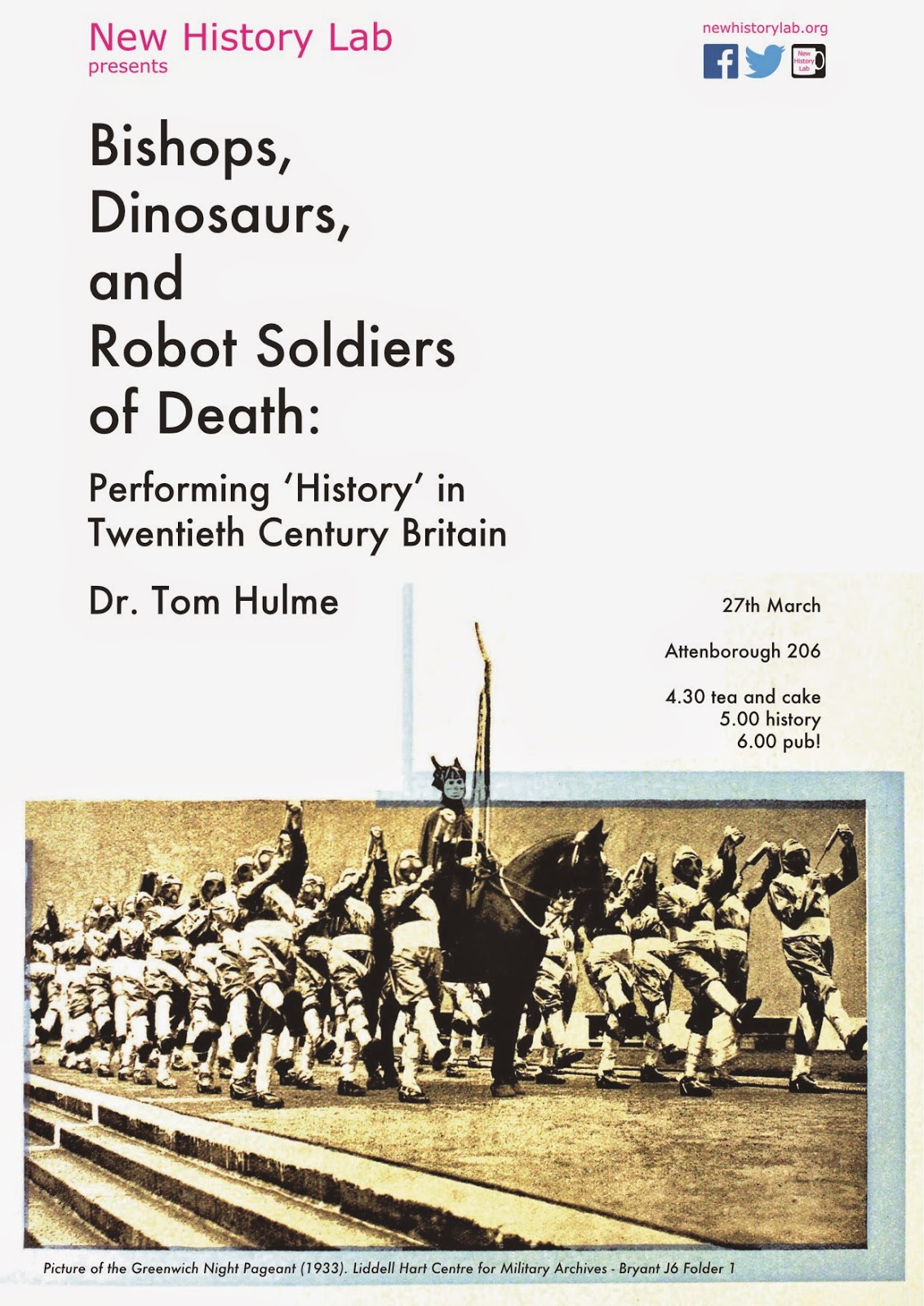
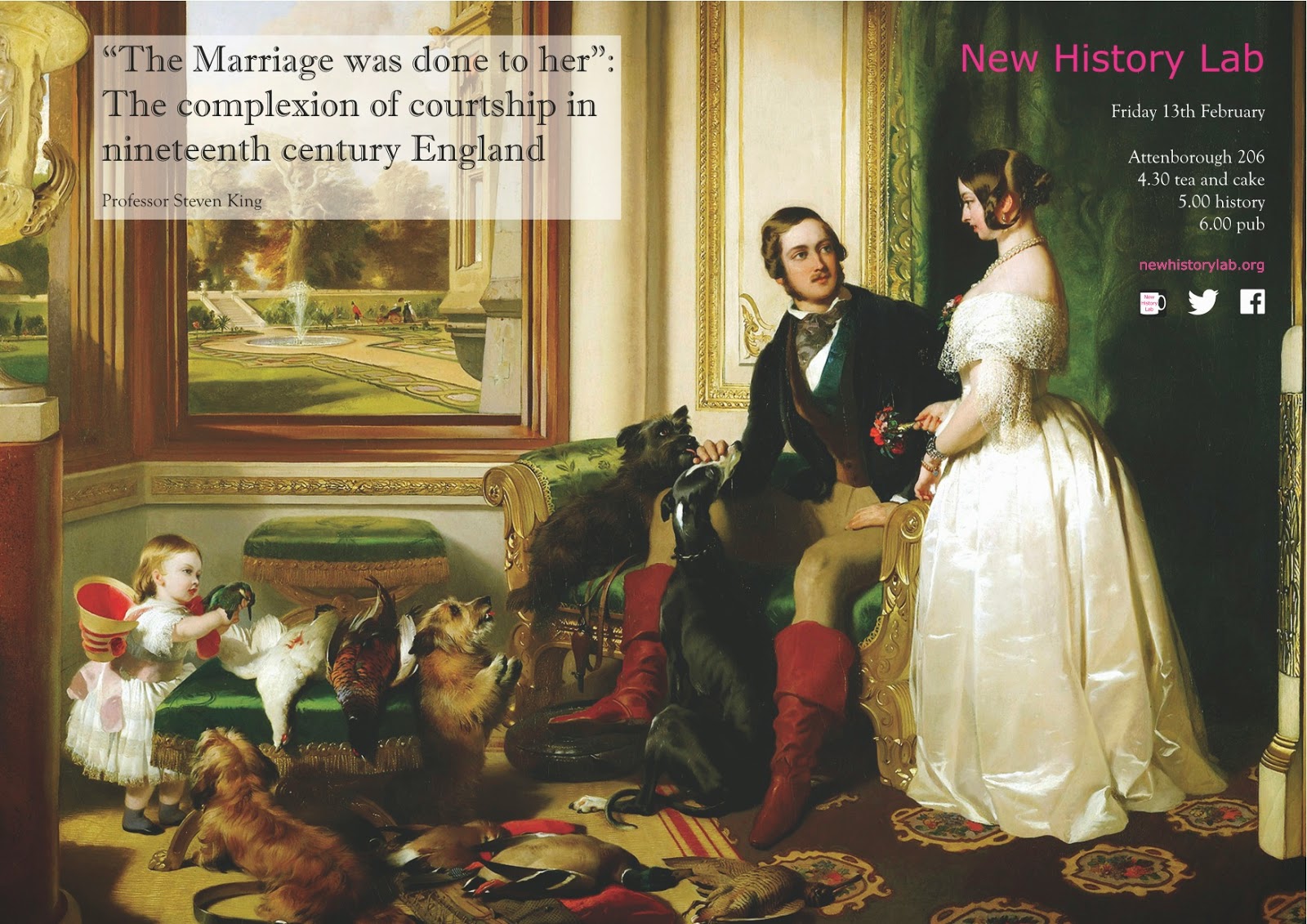
The rest of this term we have a great range of labs: Steven King will be talking about nineteenth century courtship; Simon Dixon from the library will be presenting an introduction to the special collections; postdoc researcher Eureka Henrich will be offering her thoughts on life beyond the PhD; and former committee member Tom Hulme will be speaking on what is the best title I have ever read: 'Bishops, Dinosaurs, and Robot Soldiers of Death: Performing 'History' in Twentieth Century Britain'. Now, should really get on with a poster to match that!

(We also have some special collaborative events in the works, which will be announced shortly. Watch this space!)


*The NHL Committee only condone the kind of substances that can be purchased in pubs
Thursday, 29 January 2015

The World's Your Oyster


Tomorrow we have a panel discussion about global history in the undergraduate curriculum, featuring some of the School of History's leading lights. The more questions you have the better!

Note that all this terms labs will be in Attenborough 206

Friday, 9 January 2015

New History Lab Showcase!


Ready to return to from the weeks of debauchery to continue forging the intellectual future? Our first lab of 2015 will feature short talks from committee members Katie, Matt and Sam. Should be something to appeal to everyone!

(This lab will be in Attenborough 208, not our usual room)

Tuesday, 6 January 2015

Up an' at 'em, Jed Jaggard

A recording of Jed's lab on historical re-enactment from November 28th. Not long till labs start now!

Tuesday, 30 December 2014

The Story of Leicester, Siobhan Begley

Back in October Siobhan Begley came and told us the history of Leicester from the Romans to the present. You can now hear that here, and Siobhan's book The Story of Leicester can be found in the university bookshop (and elsewhere)

Monday, 15 December 2014

New History Lab podcast - Black Friday

Dan, Joe, Katie and Sam discuss consumerism and Black Friday
https://archive.org/details/nhl_blackfriday
We also refer to Adam Curtis' documentary series The Century of the Self, the recent BBC series The Men Who Made Us Spend and Edward Bernays' Torches of Freedom campaign to get women smoking. And a novel which Dan will add in the comments ;)

Wednesday, 10 December 2014