Thursday, 25 November 2010
'The Poor' in the Twenty-First Century?
New History Lab presents... Leicester on Film
Wednesday 1st December, 1 Salisbury Road (seminar room), 6-8pm
As an extra and special event this year, New History Lab in collaboration with the Media Archive for Central England invites you to a film night dedicated to the city of Leicester.
Using a rage of material; documentary, feature film and regional television, our resident film experts James Patterson and Julie Ives will introduce and discuss the history of Leicester on film.
It's the city of Leicester, the people of Leicester, by Leicester film makers -it's Leicester on film.
Popcorn will be provided. BYOB.
Wednesday, 24 November 2010
Our Man at the CCT: Issues and Principles (3)
Howdy-doody Labarinos,
I was having a think, and decided that this next post in the series should be about some of the issues and principles of conservation that I've come across from working for a month at The Churches Conservation Trust, a historic buildings conservation charity.
For clarity's sake, I should probably get some definitions down before we get much further, because this stuff can get tricky!
Conservation - a profession devoted to the preservation of cultural heritage for the future. Conservation activities include examination, documentation, treatment, and preventive care. All of this work is supported by research and education. (This can include altering the use of the space to retain the historic fabric).
Preservation - a professional endeavour that seeks to preserve and protect buildings, objects, landscapes or other artefacts of historic significance. (The idea of preserving a historic space ‘in aspic’ is contested as to how virtuous it is - a space which is not allowed to develop and mutate to suit the people who use it is not functioning to the best of its ability).
Restoration - the process of the renewal and refurbishment of the fabric of a building. Restoration can include building cleaning, building repair, and rebuilding. (Anyone who follows my personal twitter and witnessed me swearing at the episode of ‘Grand Designs’ in which the subject ‘restored’ a building that was built in the 15th Century building by ripping out 16th, 17th, 18th, 19th and 20th Century fabric will be well aware that I believe this style of restoration to be the anti-christ).
Regeneration - Regenerating buildings can reinforce a sense of community, make an important contribution to the local economy and act as a catalyst for improvements to the wider area. [Historic spaces] should not be retained as artefacts, relics of a bygone age. New uses should be allowed in the buildings and sensitive adaptations facilitated, when the original use of a historic building is no longer relevant or viable. (This makes me happy and is good and woo!)
In my opinion, a combination of conservation and regeneration is the best way to do it as you end up with a project that has saved and protected the historic fabric of a space or place, without compromising how useful this space can be. (This is a fairly major part of the work at the CCT, as closed church buildings in urban centres find that they have to find new uses so as to avoid dereliction, and be able to afford rents and maintenance in the expensive urban landscape).
The Churches Conservation Trust create their Assessments of Significance (I've been helping to write them!), using a series of principles that are based on English Heritage's "Conservation Principles" (which you can download). The very basic jist of them is that old things are significant, old and unique things are of high significance, and old, unique, pretty, and communally important things are untouchable.
One of the issues that I haven't fully resolved myself is with my mother ... no wait, wrong blog. One of the *conservation* issues that I haven't worked out properly is the idea that the older something is, the more significant that makes it. Or rather, the more recently that something was built, the less significant it is - why should it be a good result to knock a doorway through a nineteenth century vestry, rather than an Anglo-Saxon aisle wall? I understand there's an element of relative significance to be considered, and that the general rule with the archaeological record is that the older something is, the more rare it is, and therefore the higher significance, but having said this, I'm still not entirely comfortable with saying 'yeah, its only nineteenth century, go and get the sledgehammer'...
This issue can be expanded past church buildings to urban conservation in general. Conservation bigwigs are currently debating whether we should conserve bad quality, post-war 1950s housing for the sake of conserving it, or should we mow it all down and build 21st century housing in its place. Post-war housing is not seen as significant because there is suburb upon suburb of the stuff, its not particularly aesthetically significant (unless you like asbestos), and it was only built 60 years ago, so it hasn't entered the significant realms of 'historic fabric' yet.
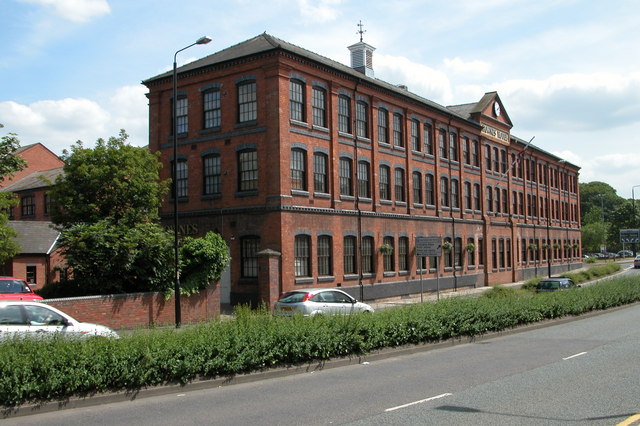
That 'yet' is damn important, this same argument was made about Victorian industrial buildings and factories (like this beauty in Worcester) a century ago, and people started pulling them down to make way for corregated iron-covered replacements, lucky us...
So in 50 years time, will an intern be writing a hover-blog, powered by anti-matter and vegetable oil, on how those idiot early-21st centuryers pulled down swathes of beautiful 1950s housing, and even worse, built toilets in astoundingly significant nineteenth century church vestries?
I'd love to hear your views on this! Thanks,
Your friendly neighbourhood Mark
Definitions: Conservation, Preservation and Restoration - Wikipedia.org (that’s right, I dared); Regeneration - ‘The Role of Historic Buildings in Urban Regeneration’, House of Commons
Tuesday, 23 November 2010
*Deadline Reminder*History Idol -Leicester’s Got Talent!*Deadline Reminder*
Just a quick reminder guys n' dolls that you have one more week to get your entries in for History Idol: Leicester’s Got Talent!
We’ve had some cracking abstracts so far, but there’s plenty room for more.
The deadline is Friday 26th November, so if you would like the chance to share your Historical musings with the Lab next semester send your abstracts to Gill: [email protected]
We hope this will be a History Lab in the classic sense; a place to experiment. Perhaps, you have an idea that you don’t think is ready for you supervisor, but you’d like to road test on some History-minded people? Don’t be afraid to push the boundaries folks, even if it’s only a germ of an idea just now, presenting it at History Lab could help develop it into something BIG!!
So regardless of your position on the conveyor belt of academia we’d like to hear from you.
1) Please send us a 150 word abstract for a 15min presentation on any era and any theme. Include, your topic area, why you’re interested in it, and your approach to the subject.
2) Give it an attention grabbing title -make us want to hear it!
3) Following the deadline on the 26th we’ll put all the titles anonymously on the blog. Everyone will then have two weeks to vote for their favourite title. The winners will be announced on the 9th December (the last Lab before Christmas).
Good Luck!!